

Mold Overview
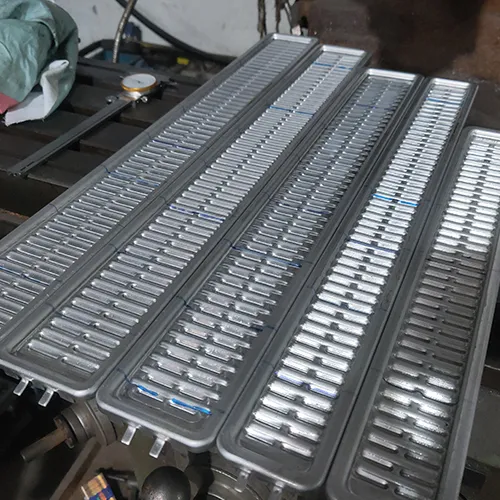
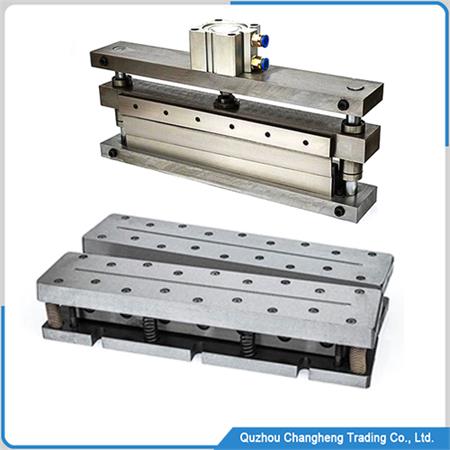
Stamping die is an important tool for modern industrial production. It is composed of templates, guide pillars, springs, mold cores and other parts. Each part needs to be manufacture with high precision to meet production requirements.
Some complex metal products require multiple stamping mold to stretch the parts according to the production sequence, cut, bend, open holes and other processes and finally form the required shapes and sizes.
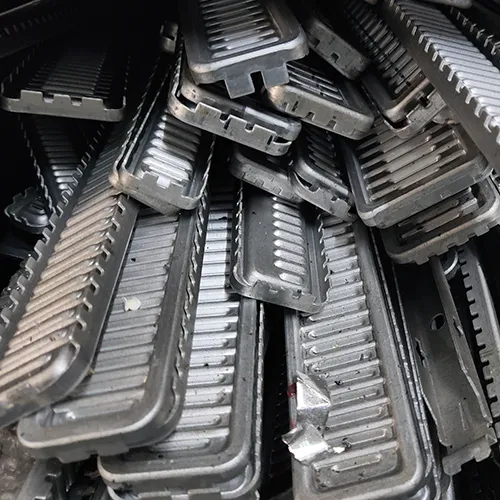
This article mainly talks about the aluminum parts of automobile radiator, the stamping mold and production process it needs. Let’s begin.
Stamping die manufacturing
- Material selection for molds
According to the application and performance requirements of the workpiece, because the parts of the automobile radiator are made of aluminum, which is a relatively soft metal material, the selection of appropriate die steel can meet its requirements, because it can save money
- Mold design
Using CAD/CAM software for 3D modeling, understanding the structural characteristics of parts, designing production processes for stamping dies, optimizing mold structures, utilizing existing processing technologies to design the most suitable molds, and achieving the most cost-effective manufacturing costs
- Manufacturing process:
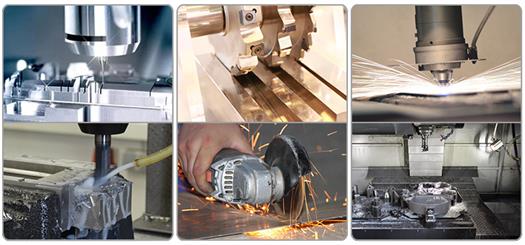
Usually, high-precision machining equipment is uses to manufacture parts, such as CNC milling machines, EDM cutting machine, etc. Some key parts also need to be ground and polished to ensure the surface smoothness of the parts
- Part hardening treatment
In order to ensure the service life of the stamping die, some parts need to undergo quenching and hardening treatment, such as vacuum high-temperature quenching or nickel nitriding processes, to increase the hardness and wear resistance of the parts
- Testing and Quality Control
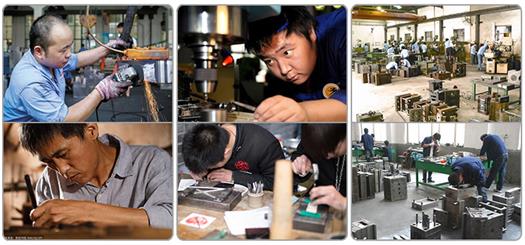
When the mold manufacturing is completed, it needs to be verified to ensure that it meets the design requirements. This process requires highly experienced engineers to participate in the work to ensure that the mold can meet the expected requirements.
Stamping die data
| No. | ITEM | DATA |
| 1 | Mold Usage | Stamping |
| 2 | Production materials | Aluminum galvanized sheet |
| 3 | Mold application | Radiator Condenser Heater |
| 4 | Mold material | EN C45 Cr12MoV |
| 5 | Quenching hardness | 58-62 |
| 6 | Mold color | Custom |
| 7 | Delivery time | 45 days |
| 8 | Minimum order quantity | 1 nos |
Stamping die working video
Other types of radiator machines
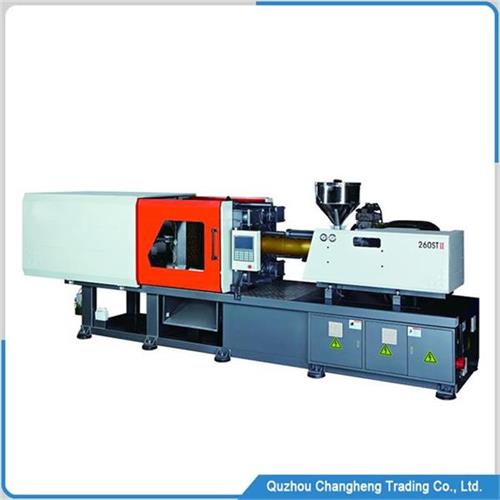
Used plastic injection machine
Machine outline This used plastic injection machine has the characteristic of high precision and can meet the demand for producing injection molded products with high electronic precision. Applying its PID temperature control system and wear-resistant…

Radiator crimping machine for cars and trucks
Machine Overview The main function of this radiator crimping machine is to combine the head plate, sealing gasket, and plastic tank together to form a complete aluminum radiator. During the production process, the claws on…
Radiator core assembly machine
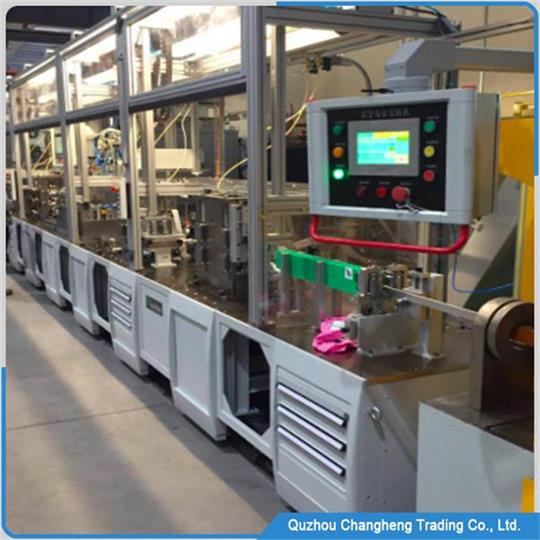
Equipment outline The Radiator core assembly machine is used to assemble heat exchanger cores and heat dissipation belts in automotive radiators, condensers, intercoolers, oil coolers, and other heat exchangers. It adopts advanced automation technology with…
Radiator clinching machine
Machine outline This radiator clinching machine is mainly driven by servo motors and cylinders, allowing engineers to customize work steps to achieve automatic obstacle avoidance. This device can produce truck and car radiators of any…
Our services and support
We accept customized stamping mold of any type in the automotive industry. Whether you need automotive radiator, intercoolers, oil cooler, or clutch, brake pads, and other metal parts, we can provide good stamping mold solutions
The warranty policy for each mold is 300000 stamping cycles, no maintenance required, or a 12-month period, whichever comes first
If you need any parts of the stamping die, there is a long-term stable supply of mold parts at very good prices
We carefully design each part, optimize the structure of the mold, improve its production efficiency by one level, simplify positioning, and provide error prevention function in the production process


 WECHAT


